

Purple Candelabra Gorgonian | Plexaura flexuosa
Purple Candelabra Gorgonian | Plexaura flexuosa
SHIPPING RESTRICTION: THIS ITEM MUST BE SHIPPED VIA FEDEX PRIORITY OVERNIGHT SHIPPING!
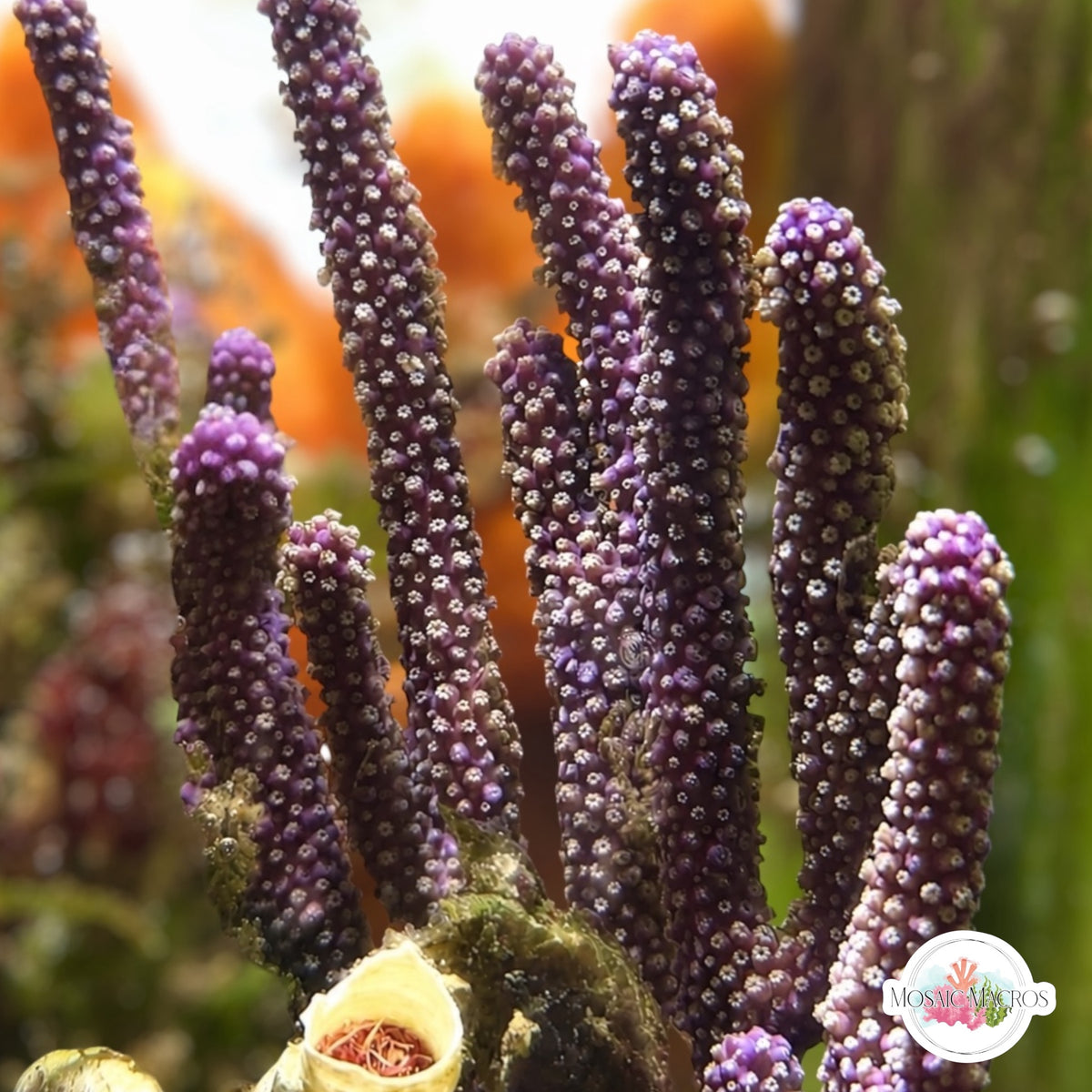
The Purple Candelabra Gorgonian (Plexaura flexuosa) is a beautiful photosynthetic soft coral recognized for its elegant branching structure, rich purple coloration, and distinctive candelabra-like growth pattern. Individual colonies may display shades of lavender, violet, grayish-purple, with numerous elongated branches that extend upward and outward to form intricate, bushy structures. Its flexible branches are supported by an internal proteinaceous skeleton and covered in numerous small polyps that extend delicate feeding tentacles into the surrounding water. When fully expanded, these polyps give the colony a soft, slightly fuzzy appearance that contrasts beautifully with its smooth, branching silhouette. Unlike non-photosynthetic gorgonians, Plexaura flexuosa contains symbiotic photosynthetic dinoflagellates that provide a substantial portion of its nutritional requirements. Native to the tropical western Atlantic, including Florida, the Bahamas, and the Caribbean, this species naturally inhabits shallow coral reefs and other well-illuminated marine environments with consistent water movement. Its graceful structure, attractive coloration, and relatively adaptable nature make it a desirable addition to established reef aquariums.
Care Level: Moderate
Temperament: Peaceful
Lighting: Moderate to High
Water Flow: Moderate to Strong
Temperature: 74–80°F
Specific Gravity: 1.024–1.026
pH: 8.1–8.4
Plexaura flexuosa is best maintained in mature, established reef aquariums with stable water parameters, appropriate lighting, consistent water circulation, and sufficient space to accommodate its branching growth. Unlike non-photosynthetic gorgonians that depend almost entirely on capturing suspended food particles, Purple Candelabra Gorgonians obtain a substantial portion of their energy from symbiotic photosynthetic dinoflagellates living within their tissues. This relationship makes them generally more manageable than specialized deepwater gorgonians, although proper environmental conditions remain essential for long-term health.
Moderate to high reef lighting is recommended to support healthy photosynthesis and maintain consistent growth. Specimens should be acclimated gradually to stronger illumination, particularly when transitioning from shaded holding systems or lower-light environments. Moderate to strong, indirect water movement is equally important for delivering nutrients, maintaining gas exchange, and preventing sediment from accumulating across the colony. Alternating or multidirectional flow is generally preferable to a concentrated, continuous jet, allowing the branches to sway naturally without experiencing excessive mechanical stress.
Although photosynthesis provides much of its nutritional energy, Purple Candelabra Gorgonians may also capture suspended plankton and fine organic particles using their extended polyps. Occasional supplemental feedings of appropriately sized zooplankton, rotifers, copepod nauplii, or fine particulate coral foods may provide additional nutrition. However, heavy feeding is generally unnecessary when specimens receive adequate lighting and maintain healthy polyp extension.
Purple Candelabra Gorgonians are generally peaceful toward fish, shrimp, snails, and most other ornamental marine invertebrates. However, sufficient space should be maintained between the colony and neighboring corals to prevent physical contact, shading, and potential damage from aggressive stinging species. Certain angelfish, butterflyfish, and other coral-nipping fish may damage exposed polyps or branch surfaces. Its flexible branches should also be positioned away from abrasive rockwork and areas where persistent contact could cause tissue injury.
Maintaining stable calcium, alkalinity, magnesium, and other essential reef parameters supports overall aquarium health and the biological processes associated with gorgonian growth. While Plexaura flexuosa does not construct a massive calcium carbonate skeleton like stony corals, its tissues contain microscopic skeletal elements called sclerites. Stable water chemistry, adequate trace element availability, and consistent maintenance remain important for supporting healthy tissue development.
One of the primary challenges associated with branching gorgonians is preventing nuisance algae, cyanobacteria, and other fouling organisms from accumulating across their surfaces. Consistent water circulation, appropriate nutrient management, and sufficient lighting help maintain healthy polyp expansion and reduce the likelihood of tissue deterioration. Areas of persistent polyp retraction, exposed skeleton, or progressive tissue loss should be investigated promptly.
Purple Candelabra Gorgonians should be attached securely to stable rockwork, allowing their branches to extend freely into the surrounding water column. Because mature colonies can develop substantial height and width, adequate vertical clearance and surrounding space are important. Their branching structures may also provide shelter for small reef fish, crustaceans, and other beneficial marine organisms.
Its beautiful purple coloration, graceful candelabra-like branches, delicate extended polyps, and natural swaying movement make Purple Candelabra Gorgonians exceptional additions to mature reef aquariums, Caribbean-inspired biotope displays, and carefully managed marine coral collections.
Couldn't load pickup availability

-
Free Shipping!
Free FedEx 2Day is available on orders of $200+ post-discounts, with a $25 upgrade option to Priority Overnight.
Free FedEx Priority Overnight is available on orders of $300+ post-discounts.