

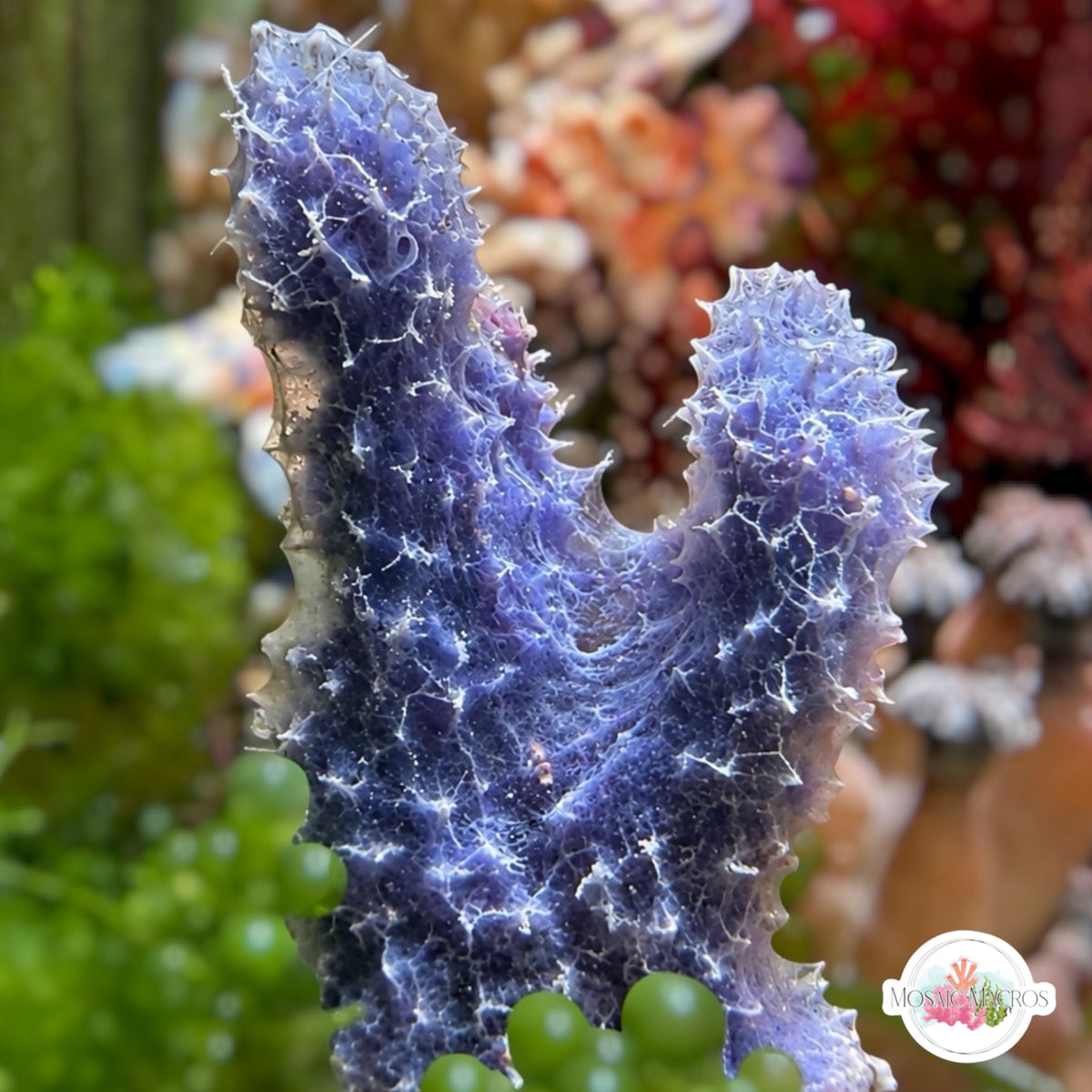
Blue Etherial Sponge | Dysidea etheria
Blue Etherial Sponge | Dysidea etheria
SHIPPING RESTRICTION: THIS ITEM MUST BE SHIPPED VIA FEDEX PRIORITY OVERNIGHT SHIPPING!
Disclaimer: Due to variations in this species, your specimen may not be identical to the representative photo.
The Blue Etherial Sponge (Dysidea etheria) is a striking ornamental marine sponge recognized for its unusual blue coloration, irregular growth habit, and distinctive textured surface. Individual specimens may display shades of pale sky blue, turquoise, slate blue, and bluish-purple, creating a beautiful contrast against natural reef rockwork and surrounding marine organisms. Rather than developing the elongated branches characteristic of rope sponges, this species typically forms irregular, encrusting to cushion-like growths with raised lobes, folds, and uneven projections. Its surface contains numerous microscopic pores through which seawater enters an intricate internal filtration system, allowing specialized cells to capture suspended food particles before filtered water exits through larger openings. Unlike corals and other conventional reef invertebrates, sponges lack true organs and rely on continuous water filtration for nutrition and gas exchange. Found in tropical western Atlantic waters, including the Caribbean and Florida region, Dysidea etheria inhabits shallow marine environments where it grows attached to stable submerged surfaces. Its remarkable coloration, unusual texture, and fascinating filtration biology make it an attractive addition to specialized marine aquariums.
Care Level: Difficult
Temperament: Peaceful
Reef Safe: Yes
Diet: Filter Feeder / Bacterioplankton & Microscopic Organic Particles
Temperature: 74–80°F
Specific Gravity: 1.024–1.026
pH: 8.1–8.4
Dysidea etheria is best maintained in mature, established marine aquariums with stable water parameters, consistent water circulation, and a reliable supply of naturally occurring microscopic food particles. Unlike photosynthetic corals and macroalgae, Blue Etherial Sponges do not depend on light for nutrition. Instead, they continuously draw seawater through their internal canal systems, extracting bacteria, fine suspended organic matter, and other appropriately sized particles. Their specialized feeding requirements make them considerably more challenging to maintain than conventional ornamental reef invertebrates.
Moderate, indirect water movement is important for delivering suspended nutrients, maintaining gas exchange, and preventing sediment from accumulating across the sponge’s irregular surface. Excessively stagnant conditions can interfere with filtration and encourage detritus buildup, while concentrated, forceful water movement may damage delicate tissues. Placement on stable rockwork with adequate surrounding circulation is recommended, allowing the sponge’s surface to remain unobstructed. Because this species does not rely on photosynthesis, intense reef lighting is unnecessary, and shaded or moderately illuminated areas may help reduce nuisance algae growth across its surface.
Supplemental feedings of appropriately sized bacterioplankton, fine particulate marine foods, and specialized sponge preparations may help support its nutritional requirements. However, the precise captive diet of Dysidea etheria remains poorly documented, and no single commercial food should be considered nutritionally complete. Mature aquariums with diverse microbial populations and a consistent supply of suspended organic matter are generally preferable to newly established or heavily nutrient-stripped systems.
Blue Etherial Sponges are generally peaceful toward fish, shrimp, snails, and most other ornamental marine invertebrates. However, certain angelfish, butterflyfish, nudibranchs, and other sponge-feeding organisms may consume or damage their tissues. Because this species can develop spreading, encrusting growth, adequate space should be provided between the sponge and neighboring corals or other sessile organisms. Some members of the genus Dysidea also produce biologically active defensive compounds, making direct contact with sensitive neighboring organisms undesirable.
Blue Etherial Sponges should remain completely submerged during handling, acclimation, and placement whenever possible. Exposure to air can introduce trapped gas into their internal canal systems, potentially interfering with filtration and contributing to tissue deterioration. Specimens should be transferred underwater and handled gently without squeezing, compressing, or unnecessarily manipulating their tissues. Areas of persistent discoloration, tissue breakdown, or an unusually foul odor may indicate deterioration and should be investigated promptly.
Maintaining excellent water quality while providing sufficient nutrition is one of the greatest challenges associated with this species. Efficient biological filtration, appropriate mechanical filtration, and consistent maintenance are important for preventing the accumulation of excess organic waste without eliminating the microscopic food resources necessary for survival. Stable salinity, temperature, and overall water chemistry are equally important for minimizing stress and supporting long-term health.
Due to its specialized nutritional requirements and uncertain long-term survival in conventional reef aquariums, Dysidea etheria is best reserved for experienced aquarists maintaining mature, biologically diverse marine systems. Its spectacular blue coloration, unusual encrusting growth, distinctive textured surface, and fascinating filter-feeding behavior make Blue Etherial Sponges extraordinary additions to carefully managed marine displays and specialized filter-feeder aquariums.
Couldn't load pickup availability


-
Free Shipping!
Free FedEx 2Day is available on orders of $200+ post-discounts, with a $25 upgrade option to Priority Overnight.
Free FedEx Priority Overnight is available on orders of $300+ post-discounts.